
What the Hell Happened Now
A furniture store owner in Kansas watched the tariff announcement and made a decision. No hesitation. Pure forward thinking.
He was closing his store.
Ninety percent of his products were made overseas. Why? Furniture manufacturing left the U.S. years ago. The skilled workers are gone. The infrastructure is gone. There's no switch to flip that brings it back.
He didn't make a bad business decision. He didn't miss a market shift. He built a solid business that worked—until a policy change made it impossible overnight.
He's not alone.
Often the hell that breaks loose has absolutely nothing to do with you or your business.
No matter how strong your strategy, how sharp your team, how much your customers love you, a single move by an external force can change everything. In an instant. Government regulation. Economic upheaval. Trade policy. Labor disruption. A freaking plague.
When that happens, you have two choices. Shut down or evolve.
The most dangerous thing you can do? Wait for things to go back to normal. That's the status quo talking.
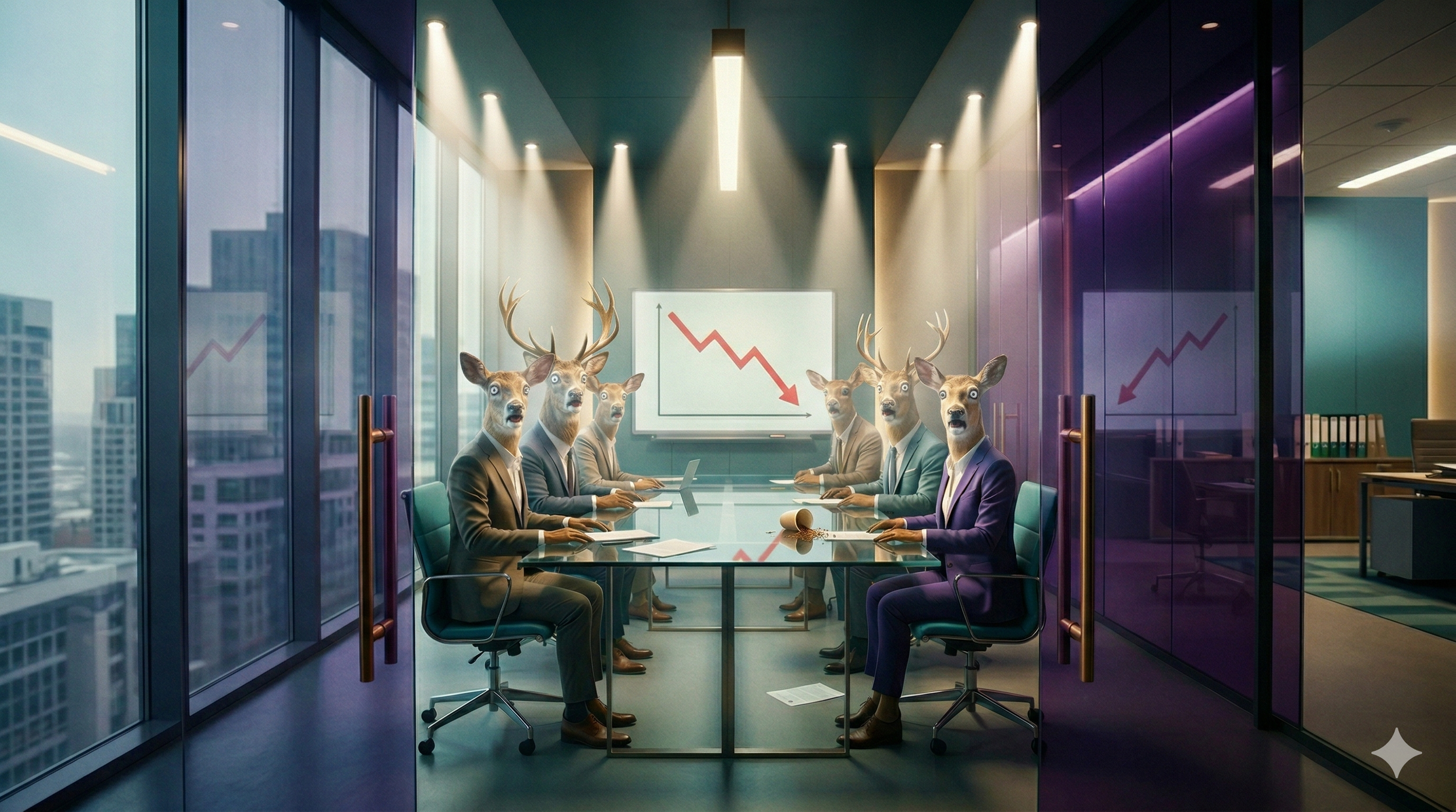
Don't be a deer in the headlights.
The most natural reaction to sudden change is to freeze. Assume things will normalize. Keep following the plan. After all, it’s the way it’s always been. It has to go back to normal, right?
That's status quo at work. It will keep you grounded longer than whatever the hell changed.
I've seen it in clients again and again. Companies that struggle the most aren't the ones who got blindsided. They're the ones who keep operating as if it hadn't happened. Waiting for the status quo to return. Making decisions based on the world they wanted back, not the world they were in.
The what the hell thing is not your fault. How you respond is.
It doesn't mean panic. It doesn't mean throwing everything out. It does mean stepping back, opening our minds and learning everything we can about the new and oh so different truth. Having the courage to look away from what we know to ask the deep questions about the new and different.
Sometimes evolving means pivoting your supply chain. Sometimes it means finding a completely different customer for the same core expertise. Sometimes it means getting smaller and leaner so you can survive long enough to grow again when the environment shifts.
The businesses that make it through the what the hell moments are the ones that adapt quickly. Eyes wide open, letting go of what was, learning and then applying what is and what will be.
The winners are the ones who adapt with the shift.
A manufacturer watched the tariff numbers and knew the math would never work. Instead of waiting for the policy to change, she called her top engineer and asked a different question: what else can we build with this equipment and these skills? Three months later, she had her first domestic contract in an industry she'd never considered.
A construction company lost half its crew to fear. Workers who stopped showing up because they didn't know if today was the day everything changed in their world. The owner spent two weeks on the phone with trade schools and veterans' programs. His timeline slipped. His margins tightened. He kept building.
A restaurant owner who'd built her food around exotic imported ingredients didn't wait for the supply chain to stabilize. She rebuilt her menu around local farms. Different dishes. Different price points. Same quality. Her regulars barely noticed the shift. The new customers came for the story.
None of them wanted to change. All of them had to. They literally had no choice. The difference between them and the ones who closed their doors?
They adapted and shifted direction.
I file external forces under “ shit happens.” Tariffs. Regulation. Economic shifts. Workforce disruption. They can crash a business that was flying high a month ago.
The forces that ground you are rarely in your control.
What you do next absolutely is.