
The Habit That Strangles Our Future
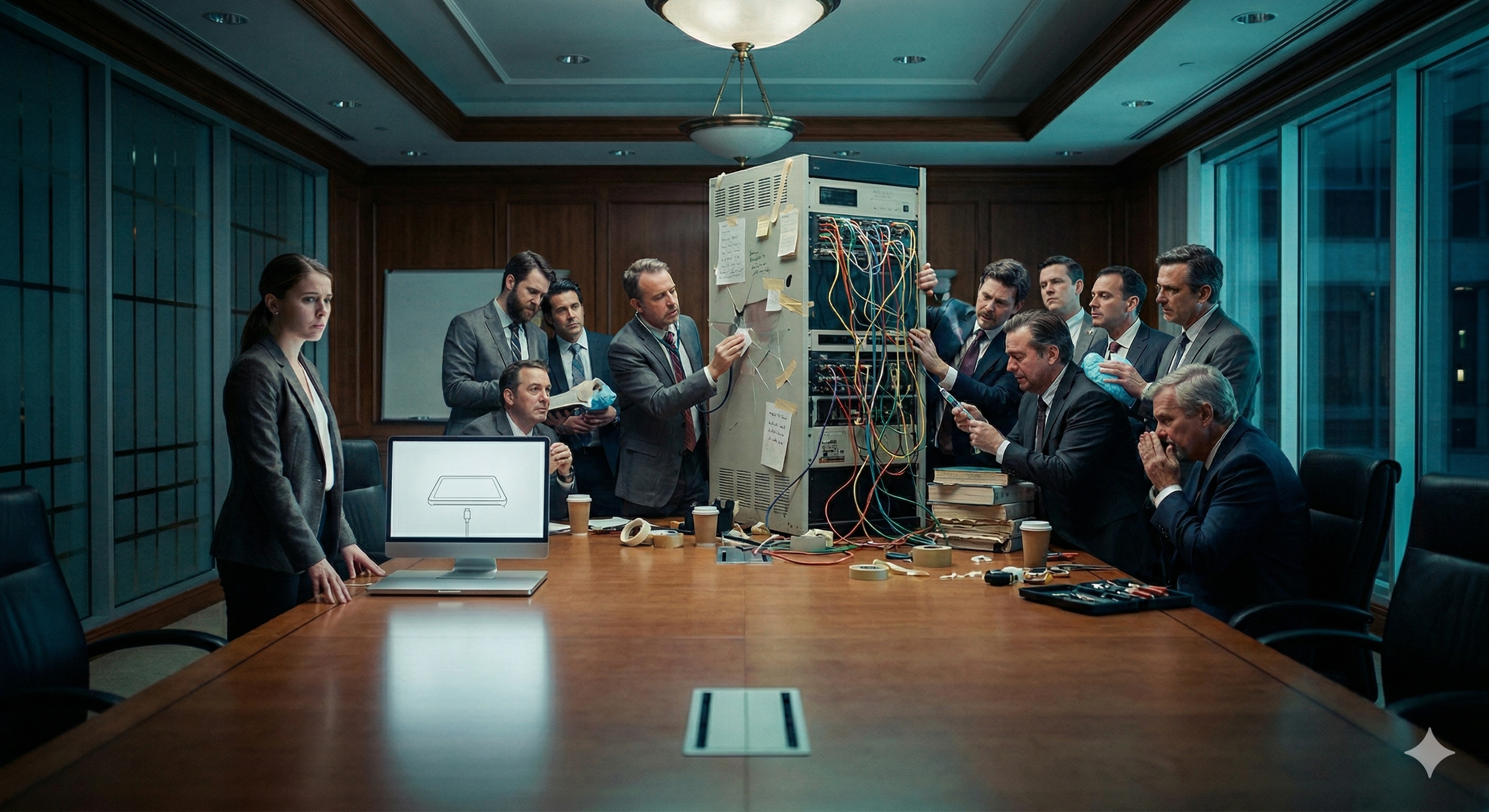
I had a turnaround client with a product that was genuinely brilliant. The kind of technology that makes engineers’ eyes go wide and competitors go quiet.
It was also five years old. The market it served was shrinking. Customers were finding cheaper, simpler alternatives. But my client kept pouring money into it — more than half their entire development budget — because they loved this thing. It was the product that put them on the map. Their baby.
Meanwhile, another team inside the company had something new. Something hot. Game-changing potential in one of the fastest-growing markets in their industry.
That new product? Underfunded. Understaffed. Constantly losing the resource fight to the legacy beast.
The future was being strangled so the past could survive.
When I asked the executive team why they were still investing so heavily in a declining product, the answer was immediate: “It’s our core. It’s what we’re known for. Our customers depend on it.”
All true. Once. Not anymore. Not in a market that had already moved on without them. When I spoke with their customers, I learned many of them were already looking for something better. They just didn’t tell my client.
Successful products become like our children.
We create them, nurture them, deliver them to the market with all the fervor of proud parents. We sit back and grin as the world falls in love with our creation. That product powers our business to its first big success.
Then the revenue road gets bumpy. The future dims a bit. We conjure up the glory of our past successes. We know our baby is still our best seller. Sales may have slipped. That must be a temporary blip.
So we discount. Just a teensy bit at first. Then more. It’s a subtle slide. We don’t notice. More likely, we simply can’t see the true reality.
Our brains are working against us. Every win, every milestone, every celebration reinforced the pattern. Now our minds treat that product as core truth. The signals that it’s fading? Our brains filter them right out. They don’t match the pattern, so we literally don’t see them.
We surround our best seller with new products and services to keep it shiny. We add extras for free to drive that top line. Lo and behold, it works! Our customers still love our baby. Just look at those revenue numbers!
How can that be a problem?
The products we love are often the ones weighing us down.
Keeping our focus on waning markets. Holding us in business models that are no longer viable. Yes, even in business, love is blind.
When our best seller can’t sell without a pile of extra support, it’s time to focus forward and identify our real value. We need to ditch the drag that former best seller is creating and find our true sources of momentum for the future.
That’s a hard idea for most of us to accept. We’re emotional beings. Leaving behind our best seller is just plain difficult. Often we stay stuck, weighed down by that best seller and all the drag it causes, until it’s too late.
The top line rarely tells the whole story.
You can bury a lot of mistakes beneath a growing top line. Revenue growth may signal success. It’s no guarantee. The thrill of the top line always gives way to the reality of the bottom line. The real bottom line. Not the artificial ones like contribution margin that some businesses use as a fudge factor. In the end, the bottom line always rules.
I had another client in the high-performance computing space. They’d taken off like a rocket. Sales were growing. The executive team was confident that massive growth was just around the corner. They were expanding manufacturing and staffing to prepare for it.
They were losing money. On every deal.
Turns out they were building every single system as a custom endeavor, from the ground up. Even when the same components were used across multiple systems, they redesigned a new wheel every time. Their most recent sale was an eight-million-dollar system. When we added the total costs, they’d lost more than a million dollars on that one deal.
The sales force had learned to discount and give away value-adds as a way to close business. Their performance was measured on top-line revenue. Who cared if the deal was profitable? Almost every deal was at a loss when we looked past the corporate legends and into the reality of dollars and cents.
Their customers? They told me directly: they didn’t care if this vendor stayed in business long term. They just wanted the fastest system for the cheapest price.
How’s that for a valued customer relationship?
Keep the value. Ditch the drag.
Here’s the thing most people miss. Moving on doesn’t mean you ditch everything about your best seller. Inherent in that successful product was a way of thinking, an expertise, a vision, an innovation. That secret sauce is your fuel for the future.
Products are a demonstration of our value at a point in time. That value comes from the distinction we provide, the expertise we bring, the difference we make. It changes over time as markets evolve or change course entirely. Our products, even our best sellers, must deliver value based on what customers need today. When customers realign their requirements, our products must follow suit.
That first company I mentioned? Their ability to build custom, next-generation systems that actually worked was their core value. Brilliant engineering. Real innovation. Their best-selling approach — custom everything at a loss — wasn’t profitable anymore. Maybe it never had been. It was time to apply that high-value expertise in a profitable way. To repeatable, higher-margin opportunities.
Market leaders recognize that their best seller isn’t a specific product. It’s a specific value. They identify their sustainable value as a customer benefit, not a thing they ship. They leverage that value to fuel their growth into new opportunities.
Here’s where it gets uncomfortable.
Is your best seller really distinct anymore? Too often our baby was distinct once upon a time. It’s lost its edge. It’s “me-too” now, with only minor distinctions. If your reps are discounting to keep it moving, that’s a signal worth paying attention to.
What does it actually cost? Not just the direct costs. The custom touches, the special requirements, the extra training, the service hours nobody tracks. The indirect costs are often the hidden drag. The more we sell, the more we lose. The full cost may never show up on the best seller’s ledger.
What are you NOT doing because of it? This is the hardest one to face. The most important. Are you strangling your future to save your past? If sixty percent of your development budget is keeping a declining product alive while your game-changing innovation is underfunded and understaffed, that’s your status quo in action.
And who are the real customers? Yesterday’s best customers may be tomorrow’s losing proposition. Markets evolve. Customer opportunities evolve with them. If your best seller’s customers don’t care whether you stay in business, you might want to rethink that relationship.
We become attached to our best sellers. They’re like our children. They are often the exact reason we’re stuck in the status quo. If we don’t realign our thinking, we’ll crash thanks to that best seller.
The secret sauce that made your best seller successful in the first place — that’s the fuel for your next move. Identify it. Protect it. Let go of everything else that’s weighing you down.
The question is: are you growing your business, or feeding your baby?